

In software development, few things matter more than clean input and predictable output. Whether it’s refactoring legacy code, normalizing data, or optimizing a build pipeline, developers understand that systems perform best when upstream inconsistencies are removed early. The same principle applies outside the digital world — particularly in land preparation, surface grading, and site management.
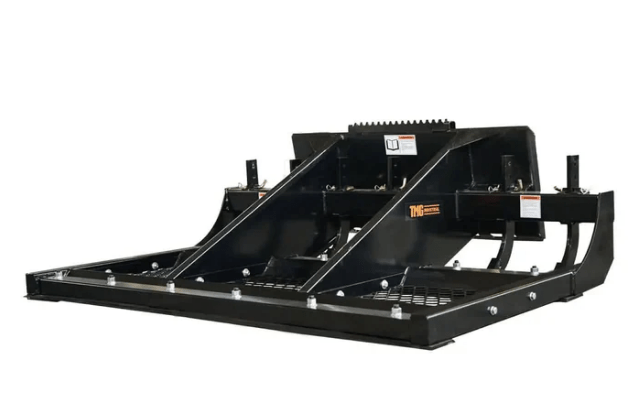
A 1.8 m skid steer land plane functions much like a preprocessing layer in a well-designed system. Instead of reacting to problems later, it establishes order at the foundation level. For property owners, contractors, and operators who think in terms of efficiency rather than brute force, this attachment represents a thoughtful, system-driven approach to ground preparation.
The “Garbage In, Garbage Out” Problem of Ground Surfaces
Uneven driveways, rutted access roads, and poorly graded pads are physical equivalents of messy data structures. They lead to downstream problems: water pooling, accelerated wear, vehicle damage, and repeated maintenance cycles.
Many operators attempt to solve these issues reactively — filling potholes, regrading small sections, or resurfacing repeatedly. This mirrors patching bugs without addressing architectural flaws. A land plane takes a different approach. It focuses on surface normalization, smoothing inconsistencies across the entire working area in a single pass.
By redistributing material rather than simply pushing it aside, the land plane produces a stable, predictable surface that holds up over time.
How a Land Plane Works as a “Normalization Layer”
At its core, a skid steer land plane is designed to collect, filter, and reapply material evenly. Adjustable scarifier teeth loosen compacted areas, while cutting blades redistribute gravel, soil, or aggregate across low spots.
This process resembles a data pipeline:
- Scarifiers break up “hard-coded” irregularities
- Blades reallocate material where it’s needed
- Screens filter oversized debris
- The output is a consistent, reusable surface
The result is not just smoother ground, but a system that requires less ongoing intervention.
Design Choices That Reflect Engineering Discipline
Developers often evaluate tools based on modularity, reversibility, and maintainability. The same criteria apply here.
This land plane incorporates:
- Adjustable scarifier teeth, allowing operators to tune aggressiveness based on surface conditions
- Reversible cutting blades, extending component lifespan and reducing replacement cycles
- A removable sift screen, enabling material reuse instead of disposal
- Universal skid steer mounting, supporting integration with existing equipment
Each feature reduces friction, downtime, or waste — all hallmarks of good system design.
Efficiency Is About Fewer Cycles, Not Faster Cycles
In performance engineering, optimization often focuses on reducing the number of operations rather than speeding up individual steps. A land plane follows this logic.
Instead of making multiple passes with different tools — rakes, buckets, box blades — the land plane consolidates tasks into a single workflow. Fewer passes mean:
- Reduced fuel consumption
- Less machine wear
- Shorter project timelines
- Lower operator fatigue
Over time, these efficiencies compound, especially for properties that require regular maintenance such as gravel driveways, farm roads, or construction access routes.
Predictability as a Maintenance Strategy
One of the most undervalued qualities in any system is predictability. Surfaces maintained with a land plane degrade more uniformly, making future maintenance simpler and less disruptive.
Rather than reacting to sudden failures — deep ruts, washouts, or uneven compaction — operators can schedule light maintenance passes at predictable intervals. This mirrors preventative maintenance in software systems: smaller, regular updates instead of major overhauls.
Predictable surfaces also reduce secondary issues such as drainage problems, vehicle alignment stress, and erosion.
Reusability and Resource Efficiency
Modern development emphasizes reuse over replacement. The removable sift screen in this land plane supports that same philosophy by allowing usable material to be retained while separating out larger debris.
Instead of hauling in new gravel or fill after every grading cycle, operators can reclaim existing material. This reduces material costs, transportation requirements, and environmental impact.
In system terms, this is resource optimization — maximizing value from existing inputs rather than constantly introducing new ones.
A Tool for Those Who Think in Systems
Not every operator approaches land work with the same mindset. Some rely on force and repetition. Others prefer structure and planning.
A skid steer land plane appeals to the latter group. It rewards operators who think holistically about surface behavior, drainage, and long-term stability. Much like well-structured code, the results may not be flashy, but they are robust and durable.
Use cases include:
- Gravel driveway maintenance
- Construction site preparation
- Farm road leveling
- Equipment yard grading
- Property access optimization
In each scenario, the goal is not just appearance, but reliability.
Final Thoughts
In both software and physical infrastructure, quality outcomes depend on how well systems are prepared at the foundation level. A 1.8 m skid steer land plane embodies this principle by turning surface preparation into a repeatable, efficient process.
By normalizing irregular ground conditions, reducing maintenance cycles, and maximizing material reuse, it helps operators move away from reactive fixes and toward sustainable, system-level solutions.
For those who value clean inputs, predictable outputs, and long-term efficiency, this land plane is not just an attachment — it’s an architectural improvement to how work gets done.


 Code Blog
Leave a comment