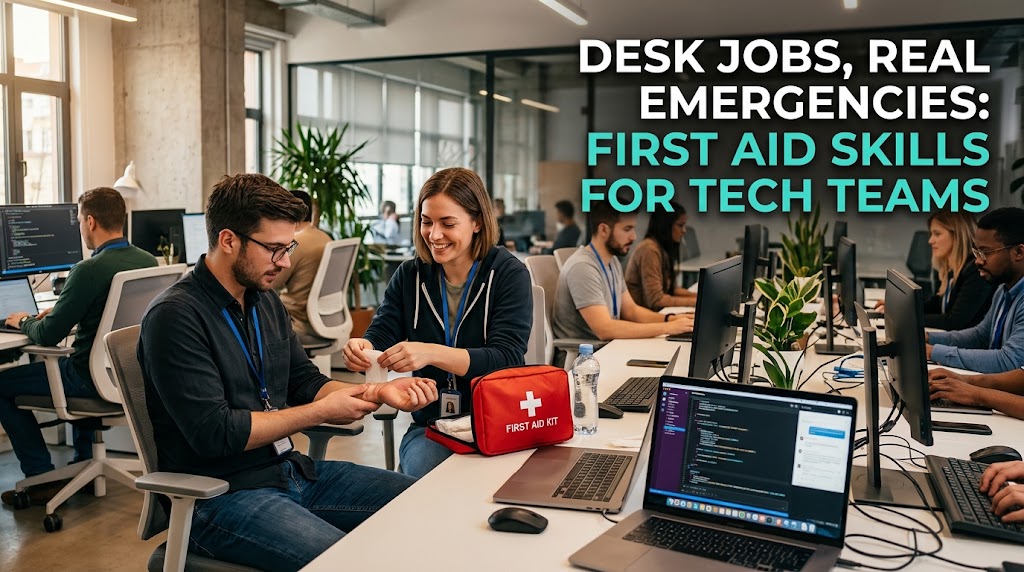


Developers spend long hours at a desk, which can make safety feel like someone else’s job. It isn’t. Most teams plan for server outages and data loss. Few plan for a coworker in distress. That gap is easy to fix. Sudden illness doesn’t check your job title. A teammate can faint during stand-up, choke at lunch, or collapse after a long release week. If your team works in Ottawa’s tech and government corridor, you can complete a Coast2Coast first aid course in Ottawa and learn what to do before paramedics arrive.
What Emergencies Can Happen In An Office?
Offices see the same medical emergencies as any other workplace, just with fewer machines and more screens. Teams commonly face:
- Fainting or sudden dizziness
- Choking at a shared lunch or team event
- Chest pain, a heart attack, or sudden cardiac arrest
- Allergic reactions to food or stings
- Seizures
- Falls on stairs, wet entrances, or loose cables
- Cuts from broken glass, mugs, or kitchen knives
None of this is rare enough to ignore. Long hours, stress, and sitting still all play a role in how people feel at work. First aid training won’t change that. It changes what happens next.
Who Acts First When The Team Is Remote Or Hybrid?
In a hybrid team, the first person to notice a problem is often a coworker on the same call, not someone in the room. That changes the plan.
Picture it. A colleague goes quiet mid-meeting and doesn’t respond. If you know their address, you can call 911 and stay on the line. If you don’t, you lose precious time. A simple habit helps: keep current emergency contacts and home addresses where a manager can reach them quickly.
In the office, think coverage. If only one person is trained and they’re on vacation, the plan has a hole. Train enough people that every shift, floor, and meeting room has someone who can step in.
What Does A First Aid Course Teach?
A first aid course teaches you to recognize an emergency, call for help, and give care until medical help arrives. Skills vary by course, but they commonly include:
- Recognizing emergencies and activating 911
- Medical emergencies such as heart attack, stroke, and diabetic emergencies
- The recovery position
- Bone, muscle, and joint injuries
- Head and spinal injuries
- Allergic reactions and use of a naloxone kit
- CPR and automated external defibrillator trainer practice
Think of it as an incident response plan for people. You learn the steps, rehearse them, and build the habit of staying calm. Developers already know the value of a runbook. This is the same idea, with a real person on the other end.
Where Should An Office Keep An AED?
Keep the automated external defibrillator somewhere visible and easy to reach, not locked in a manager’s office. In a cardiac emergency, people won’t have time to hunt for a key.
Good spots include near the entrance, by the kitchen, or close to the main meeting rooms. Add clear signs. Check the pads and battery on a set schedule, and put the date in your team calendar. Then tell everyone where it is, including new hires on day one.
First aid classes teach you to use an AED trainer, a practice device that walks you through the same steps. After one session, the real thing feels far less intimidating.
What Do Ontario Employers Need To Know?
Ontario workplaces covered by WSIB must meet first aid requirements, and a standalone CPR course doesn’t count. Regulation 1101 sets training levels by workplace size.
- Five or fewer workers: Emergency (Basic) First Aid with CPR/AED
- More than five workers: Intermediate (Standard) First Aid with CPR/AED
Most workplaces need the intermediate level, which runs 16 hours. CPR Level C covers adults, children, and infants, and it’s a good addition. It just doesn’t replace the first aid certificate.
Employers should also confirm how their own setup fits. A fully remote startup, a shared coworking space, and a government contractor each have different realities.
How Does Blended Learning Work For Busy Teams?
Students finish a self-paced online portion first, then attend a classroom session focused on skills. There are no long lectures. Instructors spend the time coaching people on technique with an AED trainer and manikins.
That format suits teams with unpredictable calendars. People can cover the theory in the evenings and join one skills session without losing a full day to slides. Certificates arrive within 48 hours, and first aid and CPR students get a free 90-day skills practice retake. If you’d like to compare formats and dates, you can learn more at their site.
How Can A Small Tech Team Get Started?
Keep it simple. Treat it like a short sprint:
- Check where the first aid kit and AED are, and test that people can find them.
- List who is trained, and when each certificate expires.
- Pick two or three people per floor or shift for training, including a manager.
- Add emergency addresses and contacts to your onboarding checklist.
- Review the plan twice a year, like any other backup.
You won’t need a big budget for this. You need a few hours and a decision. Emergencies don’t give you a staging environment, so rehearse in the real one.
If you are looking for first aid training near Rideau Street, King Edward Avenue, Sandy Hill, the University of Ottawa, or surrounding areas, you may reach out to Coast2Coast First Aid & Aquatics in that area.
FAQs
Q: Do office and tech workers really need first aid training?
A: Yes. Fainting, choking, allergic reactions, and cardiac emergencies can happen at any desk, and a trained coworker can act in the first minutes before paramedics arrive.
Q: What first aid level do most Ontario workplaces need?
A: Most workplaces need Intermediate (Standard) First Aid, which applies when a workplace has more than five workers. Emergency (Basic) First Aid applies to five or fewer.
Q: Is a CPR course enough to meet WSIB requirements?
A: No. WSIB Regulation 1101 requires first aid training, so a standalone CPR course does not satisfy it for covered workplaces.
Q: How should a hybrid team plan for emergencies?
A: Keep emergency contacts and addresses accessible to managers, and train enough people that every shift and location has someone who can respond.
Q: How long does it take to get a certificate?
A: Digital certificates are issued within 48 hours of your successful skills evaluation.





Leave a Reply